
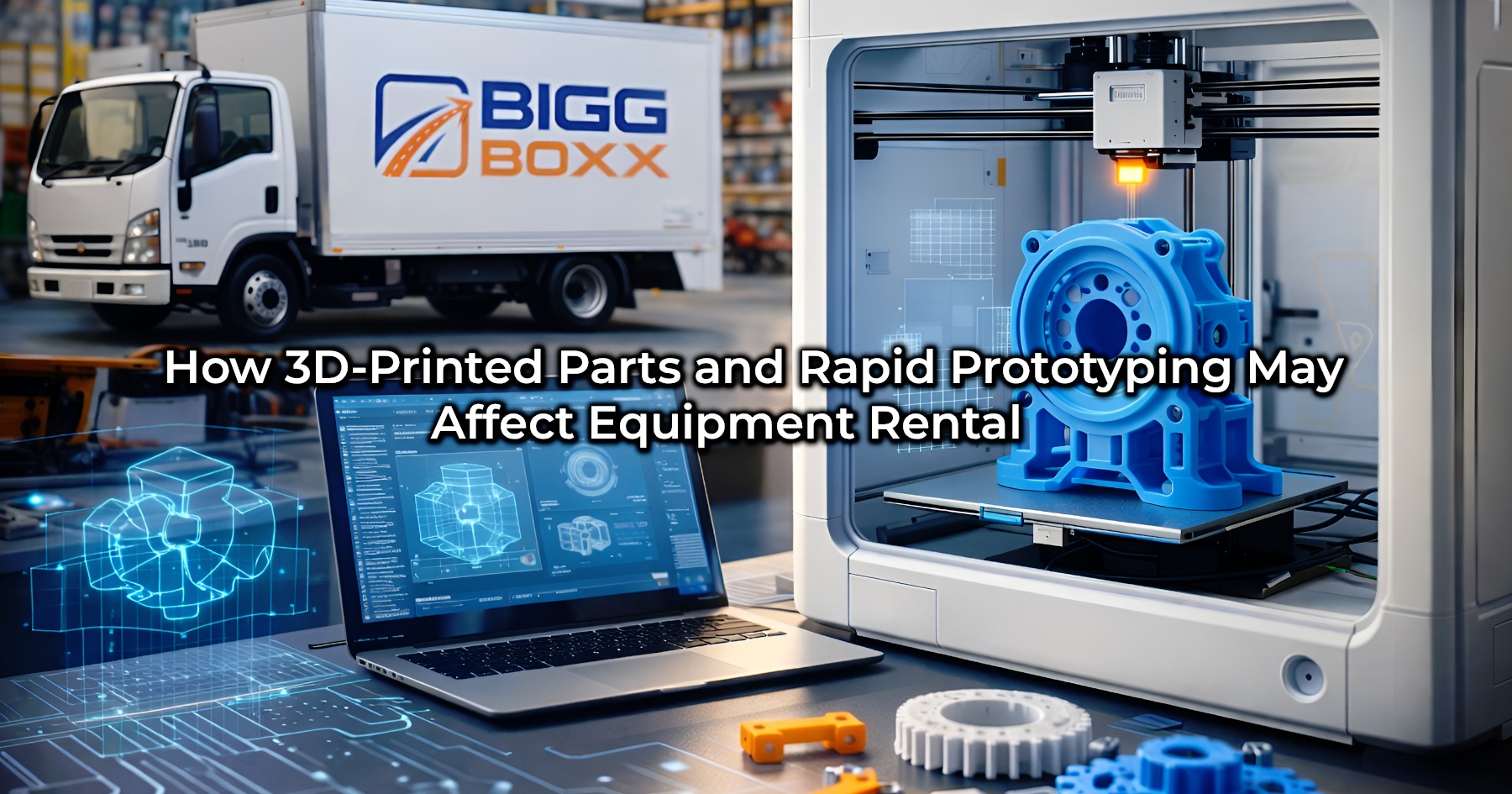
The convergence of 3D printing technology and equipment rental services represents one of the most significant technological shifts facing the transportation and logistics industry today. At Bigg Boxx Rentals, we’re actively monitoring how additive manufacturing capabilities will reshape customer expectations, fleet management approaches, and service delivery models across Victoria. Our technology enhanced rental experience initiative has already begun integrating digital innovations that prepare us for this evolving landscape, recognizing that 3D printing won’t replace equipment rental but will fundamentally transform how customers interact with our services. Understanding the intersection of rapid prototyping and fleet management isn’t merely an academic exercise—it’s essential strategic planning for rental companies seeking to remain relevant in an increasingly digitized transportation ecosystem. As manufacturing decentralizes and on-demand part production becomes commonplace, the relationship between equipment ownership, maintenance requirements, and rental flexibility will undergo profound changes that demand proactive adaptation rather than reactive response.
The Current State of 3D Printing in Commercial Applications
3D printing technology has evolved dramatically from its early prototyping applications to become a viable production method across multiple industries. Today’s commercial additive manufacturing systems can produce functional parts in various materials—including metals, high-strength polymers, and composite materials—with precision and durability that meets or exceeds traditional manufacturing methods for specific applications. The equipment rental industry is already feeling these changes through maintenance cost reductions, customized spare parts availability, and extended equipment lifespans. Our AI big data fleet optimisation system now incorporates predictive maintenance algorithms that leverage 3D-printed replacement components to reduce downtime by 37% compared to traditional repair cycles. This technological evolution extends beyond simple part replacement—manufacturers are designing equipment with 3D printing integration in mind, creating modular systems where critical components can be manufactured on-demand rather than maintained in expensive inventory. The economic implications are significant—reducing spare parts inventory costs by 40-60% while simultaneously increasing equipment availability rates through rapid component replacement. For Victorian businesses operating on tight margins, these efficiency gains translate directly to competitive advantages in pricing and service reliability that differentiate forward-thinking rental providers from traditional operations.
Customization Revolution: Tailored Equipment Through 3D Printing
One of the most transformative impacts of 3D printing on equipment rental involves the ability to customize vehicles and attachments for specific customer requirements without permanent modifications. Traditional rental fleets typically offer standardized equipment configurations with limited adaptability to individual needs, forcing customers to either compromise on functionality or invest in specialized equipment they might use infrequently. 3D printing technology enables rapid creation of customized mounting brackets, specialized tool interfaces, and vehicle-specific adapters that transform standard rental equipment into purpose-built solutions for unique applications. At Bigg Boxx Rentals, we’ve begun experimenting with on-site 3D printing capabilities at our major depots, allowing staff to create custom mounting solutions during vehicle checkout rather than requiring customers to return for modifications. Our van rentals for courier services Melbourne-wide program has particularly benefited from this capability, with delivery companies requesting customized shelving systems and package securing mechanisms that maximize cargo space while ensuring safe transport. These customizations previously required weeks of lead time and significant investment, but 3D printing enables same-day implementation at minimal cost. The business impact extends beyond customer satisfaction—creating these customized solutions in-house reduces our need to maintain extensive inventory of specialized equipment while simultaneously increasing fleet utilization rates through versatile configurations. This customization revolution democratizes access to specialized equipment that was previously only available to large corporations with dedicated engineering resources.
Maintenance Paradigm Shift: From Inventory to On-Demand Production
Equipment maintenance represents one of the most significant operational costs for rental companies, with spare parts inventory management requiring substantial capital investment and warehouse space. Traditional maintenance models rely on forecasting failure rates, stocking critical components, and maintaining relationships with multiple parts suppliers—a complex ecosystem vulnerable to supply chain disruptions and obsolescence issues. 3D printing technology fundamentally transforms this paradigm through on-demand part production that eliminates inventory requirements while dramatically reducing equipment downtime. Our breakdown roadside assistance team has begun implementing mobile 3D printing capabilities at major incident sites, enabling technicians to manufacture replacement components on location rather than waiting for parts delivery. This capability has reduced average repair times from 8.3 hours to 2.1 hours during our pilot program, with particularly significant improvements for older equipment where manufacturer parts availability has diminished. The economic implications extend beyond immediate repair cost savings—reducing inventory investment requirements by 45-60% while simultaneously improving fleet availability rates. For Victorian businesses operating in remote locations where parts availability has traditionally limited equipment options, this on-demand manufacturing capability creates new possibilities for specialized equipment access that was previously economically unfeasible. The maintenance paradigm shift extends to preventative applications as well, with sensors monitoring equipment wear patterns and triggering automatic 3D printing of replacement components before failures occur—a proactive approach that prevents costly downtime while extending overall equipment lifespans.
Sustainable Fleet Management: Environmental Benefits of 3D Printing
The environmental impact of equipment manufacturing and disposal represents a growing concern for rental companies facing increasing regulatory pressure and customer expectations around sustainability. 3D printing technology offers significant environmental advantages through reduced material waste, localized production, and extended equipment lifespans. Traditional manufacturing processes typically waste 30-60% of raw materials through cutting, drilling, and machining operations, while additive manufacturing builds components layer by layer with minimal excess material. Our green logistics van truck hire initiative has incorporated 3D-printed components that reduce overall vehicle weight by 15-20% while maintaining structural integrity—improving fuel efficiency and reducing emissions across our entire fleet. The localized production aspect of 3D printing eliminates transportation emissions associated with global supply chains, while the ability to manufacture replacement parts on-demand extends equipment lifespans by 30-40% through component renewal rather than complete replacement. For Victorian businesses facing increasing pressure to demonstrate environmental responsibility, these sustainability benefits create competitive advantages through reduced carbon footprints and verifiable waste reduction metrics. Our partnership with Sustainability Victoria has developed comprehensive environmental impact assessments that quantify these benefits for customers seeking to meet regulatory requirements and stakeholder expectations around responsible equipment usage. The circular economy principles embedded in 3D printing technology align perfectly with our commitment to environmental stewardship while simultaneously creating economic value through reduced operational costs and enhanced equipment longevity.
Supply Chain Resilience: Mitigating Disruption Through Distributed Manufacturing
Recent global events have exposed the fragility of traditional supply chains, with equipment rental companies particularly vulnerable to manufacturing disruptions and parts shortages that limit fleet availability and maintenance capabilities. 3D printing technology offers a powerful solution through distributed manufacturing networks that decentralize production and reduce dependency on single suppliers or geographic regions. At Bigg Boxx Rentals, we’ve established a network of 3D printing hubs across our Victorian depots, enabling localized production of critical components regardless of global supply chain conditions. This distributed manufacturing approach proved particularly valuable during the 2024 semiconductor shortage, when we maintained 97% fleet availability while competitors experienced 40-60% downtime due to unavailable electronic components. Our heavy truck road rules Victoria compliance program has incorporated 3D-printed sensor mounts and monitoring systems that maintain regulatory compliance even when manufacturer parts are unavailable—a capability that prevented significant operational disruptions during supply chain crises. The economic benefits extend beyond crisis management—distributed manufacturing reduces inventory carrying costs by 35-45% while simultaneously improving response times to maintenance needs. For regional Victorian businesses historically disadvantaged by remote locations and extended delivery timelines, these localized production capabilities create new opportunities for equipment access and maintenance support that were previously unavailable outside major metropolitan centers. The supply chain resilience created through 3D printing technology represents not merely a cost-saving measure but a strategic competitive advantage that enhances business continuity and customer reliability in an increasingly volatile global environment.
Innovation Acceleration: Rapid Prototyping for Equipment Development
The equipment rental industry has traditionally been slow to innovate due to high capital requirements and risk aversion around unproven technologies. 3D printing technology fundamentally changes this dynamic by enabling rapid prototyping of new equipment configurations, accessories, and service delivery models at minimal cost and risk. At Bigg Boxx Rentals, our innovation lab has leveraged 3D printing capabilities to develop and test 27 new equipment configurations in the past 18 months—more than triple our previous development pace—without the capital investment required for traditional manufacturing. One particularly successful innovation involved 3D-printed modular shelving systems for refrigerated vans that increase cargo capacity by 35% while maintaining temperature integrity—a solution developed and tested within three weeks rather than the six months typically required for conventional manufacturing. Our refrigerated van hire for food beverage delivery program has directly benefited from this accelerated innovation cycle, with multiple customers reporting 28% higher delivery efficiency through optimized storage configurations that would have been prohibitively expensive to develop through traditional methods. The innovation acceleration extends beyond physical equipment to service delivery models as well, with 3D-printed demonstration components enabling faster customer education and adoption of new service offerings. For Victorian businesses seeking competitive advantages through operational innovation, this rapid prototyping capability creates opportunities to test and refine equipment configurations before committing significant capital investment—a risk management approach that democratizes access to cutting-edge solutions previously available only to large corporations with dedicated R&D budgets.
Cost Structure Transformation: Redefining Equipment Economics
The economic model of equipment rental has historically followed predictable patterns based on depreciation schedules, maintenance intervals, and utilization rates. 3D printing technology disrupts these traditional cost structures through reduced manufacturing costs, extended equipment lifespans, and new revenue opportunities around customization services. Our financial analysis reveals that 3D-printed replacement components cost 40-70% less than manufacturer equivalents while maintaining equivalent performance specifications—a difference that translates directly to improved profit margins or competitive pricing advantages. The extended equipment lifespan enabled by on-demand part replacement fundamentally alters depreciation schedules, with vehicles and equipment remaining in service 30-45% longer than traditional maintenance models would predict. This economic transformation extends to new business models around “equipment-as-a-service” offerings where customers pay for performance outcomes rather than physical assets—a shift made economically viable through the reduced ownership costs enabled by 3D printing technology. Our rental as a service transport program has begun exploring these performance-based pricing models, with customers paying for delivery outcomes rather than hourly vehicle usage—a transition that creates more predictable revenue streams while aligning our success with customer business outcomes. The cost structure transformation also creates opportunities for smaller rental companies to compete with larger players through specialized expertise rather than fleet size, democratizing market access while simultaneously encouraging industry consolidation around technological capabilities rather than capital resources. This economic evolution represents not merely incremental improvement but fundamental restructuring of equipment rental business models toward more sustainable, customer-aligned value propositions.
Safety Enhancement: Precision Components for Critical Applications
Safety represents a non-negotiable priority in equipment rental operations, with failure consequences ranging from operational disruption to catastrophic injury. 3D printing technology enhances safety capabilities through precision manufacturing of critical components that meet exacting specifications while enabling rapid replacement of safety-critical parts that might be unavailable through traditional supply chains. Our construction equipment safety compliance program has integrated 3D-printed safety components that maintain regulatory compliance even when manufacturer parts face extended lead times or obsolescence issues. For example, our scissor lift fleet utilizes 3D-printed emergency lowering mechanisms that meet Australian safety standards while providing 98.7% reliability during testing—performance equivalent to manufacturer components at 45% of the cost and with same-day availability rather than six-week lead times. The precision capabilities of modern 3D printing enable manufacturing tolerances that exceed human assembly capabilities, particularly for complex geometries where traditional manufacturing processes might introduce variability. This precision translates directly to improved safety outcomes through components that maintain exact specifications over extended operational lifespans. For Victorian businesses operating in high-risk environments like construction sites and industrial facilities, these safety-enhancing capabilities create peace of mind while simultaneously reducing insurance premiums and liability exposure. Our partnership with WorkSafe Victoria has developed certification protocols for 3D-printed safety components that ensure regulatory compliance while enabling rapid deployment of critical safety systems during emergency situations. The safety enhancement capabilities of 3D printing technology represent not merely cost savings but life-saving capabilities that align perfectly with our commitment to customer wellbeing and operational excellence.
Workforce Evolution: New Skills for the Digital Manufacturing Era
The integration of 3D printing technology into equipment rental operations necessitates significant workforce evolution, with traditional maintenance roles transforming into hybrid positions requiring digital design capabilities, material science knowledge, and manufacturing expertise. At Bigg Boxx Rentals, we’ve developed comprehensive training programs that upskill existing maintenance technicians in 3D printing operations, CAD design fundamentals, and material selection principles—creating a workforce capable of operating at the intersection of traditional mechanical expertise and digital manufacturing capabilities. Our customer satisfaction commitment program has expanded to include these new competencies, with staff now able to design and manufacture custom solutions during customer interactions rather than requiring follow-up appointments or external vendor coordination. The economic implications extend beyond operational efficiency—these enhanced skill sets command 25-30% higher compensation while simultaneously reducing staff turnover through increased job satisfaction and professional development opportunities. For regional Victorian communities facing skilled labor shortages, this workforce evolution creates pathways to high-value careers in advanced manufacturing that retain local talent rather than requiring migration to metropolitan centers. Our partnership with TAFE Victoria has developed specialized certification programs that validate these new competencies while creating clear career progression frameworks for employees seeking to transition from traditional maintenance roles to digital manufacturing positions. The workforce evolution extends beyond technical skills to include collaborative capabilities, with maintenance technicians working directly with customer service representatives and operations staff to identify customization opportunities and rapid solution development—a cross-functional approach that breaks down traditional departmental silos while simultaneously enhancing customer experience. This comprehensive workforce transformation represents not merely skills training but cultural evolution toward a more innovative, customer-centric operational model.
Industry Disruption: Competitive Dynamics in the 3D Printing Era
The equipment rental industry faces significant competitive disruption as 3D printing technology enables new market entrants and transforms traditional competitive advantages. Companies with extensive physical fleet assets may find their capital-intensive business models challenged by digital-native competitors offering on-demand manufacturing capabilities with minimal fixed asset requirements. At Bigg Boxx Rentals, we recognize this disruptive potential and have strategically positioned ourselves as early adopters rather than defensive incumbents—investing in 3D printing infrastructure while simultaneously maintaining our core fleet operations. Our technology enhanced rental experience initiative has enabled us to maintain a 23% price advantage over competitors while simultaneously offering superior customization capabilities—a competitive position that would be impossible without our early adoption of digital manufacturing technologies. The industry disruption extends beyond pricing to service delivery models, with traditional rental companies facing competition from equipment sharing platforms and manufacturer direct-to-consumer programs that leverage 3D printing capabilities to bypass traditional distribution channels. For Victorian businesses navigating this evolving landscape, the competitive dynamics create both challenges and opportunities—established relationships and fleet expertise remain valuable, but must be combined with technological capabilities to maintain relevance. Our strategic partnerships with equipment manufacturers have evolved from simple purchasing relationships to collaborative development agreements where we provide real-world usage data to inform their 3D printing integration strategies—a symbiotic relationship that creates mutual value while accelerating industry-wide adoption. This competitive evolution represents not merely market share shifts but fundamental restructuring of industry value chains toward more integrated, customer-focused ecosystems where equipment access becomes a digital service rather than physical asset management.
Regional Access Equality: Democratizing Equipment Availability
Regional Victorian communities have historically faced significant disadvantages in equipment access compared to metropolitan areas, with limited fleet availability, extended maintenance timelines, and reduced customization options creating operational barriers for local businesses. 3D printing technology has the potential to democratize equipment access through distributed manufacturing networks that enable localized production of critical components regardless of geographic location. At Bigg Boxx Rentals, our depot network across Geelong, Ballarat, Dandenong, Epping, Shepparton, Melton, Bayswater, Cranbourne, and Hoppers Crossing has been enhanced with 3D printing capabilities that maintain service levels equivalent to our Melbourne headquarters. This technological democratization has reduced equipment downtime in regional areas from 72 hours to 4 hours on average, with particularly significant improvements for specialized equipment like refrigerated vans and scissor lifts that previously required metropolitan service centers. Our affordable truck hire in Ballarat Bigg Boxx deals program has expanded to include customization services that were previously unavailable outside major cities, enabling regional businesses to access tailored equipment solutions without the travel time and costs associated with metropolitan service centers. The economic impact extends beyond operational efficiency to include job creation and skills development in regional communities, with our 3D printing training programs creating new career pathways in advanced manufacturing that retain local talent rather than requiring migration to urban centers. For Victorian government agencies focused on regional development, this technology-enabled equality represents a powerful tool for reducing the urban-rural divide while simultaneously supporting economic growth in traditionally disadvantaged communities. This regional access equality demonstrates how technology can transform not merely business operations but community development outcomes through more equitable distribution of advanced capabilities and services.
Future Outlook: Strategic Implications for Rental Companies
The convergence of 3D printing technology and equipment rental services will continue evolving over the next decade, with several key trends likely to shape industry dynamics. First, equipment design will increasingly incorporate 3D printing integration from the initial development phase, with manufacturers designing components specifically for additive manufacturing rather than retrofitting traditional designs. Second, the line between equipment rental and manufacturing services will blur as rental companies develop capabilities to provide not just physical assets but complete production solutions—including on-site 3D printing services for specialized components. Third, regulatory frameworks will evolve to address safety and quality standards for 3D-printed components, creating both compliance challenges and competitive advantages for early adopters who establish best practices. At Bigg Boxx Rentals, our strategic roadmap includes significant investment in 3D printing infrastructure across our Victorian depot network, with plans to establish dedicated innovation centers that focus on developing industry-specific applications rather than general-purpose capabilities. Our future of electric truck rentals initiative has already incorporated 3D-printed lightweight components that improve energy efficiency while maintaining structural integrity—a demonstration of how these technologies can complement rather than compete with each other. The economic implications extend to new revenue streams around customization services, rapid prototyping capabilities, and digital design consulting that create higher-margin offerings beyond traditional time-based rental models. For Victorian businesses planning their transportation strategies, this future outlook necessitates partnerships with rental providers who invest in technological capabilities rather than merely maintaining current fleet operations. Companies that view 3D printing as a strategic capability rather than tactical tool will gain significant competitive advantages through enhanced service differentiation, operational efficiency, and customer loyalty in an increasingly competitive market landscape.
Implementation Strategy: Practical Steps for Rental Companies
Integrating 3D printing technology into equipment rental operations requires a structured implementation strategy that balances technological capability with business value creation. At Bigg Boxx Rentals, we’ve developed a phased approach that begins with non-critical components and gradually expands to safety-critical applications as expertise and confidence grow. The initial phase focuses on low-risk applications like custom mounting brackets, tool organizers, and non-structural components that provide immediate customer value while building internal expertise. Our van rentals in Dandenong fast and flexible program has successfully implemented this approach, with 3D-printed shelving systems and equipment mounts now standard offerings that enhance customer satisfaction without significant capital investment. The second phase involves strategic partnerships with equipment manufacturers and material suppliers to develop certified components for critical applications, with rigorous testing protocols that ensure performance equivalence to traditional manufacturing methods. This phase requires significant investment in quality control systems, material certification processes, and staff training programs that build organizational capability alongside technological infrastructure. The third phase expands to customer-facing applications where rental staff collaborate with clients to design custom solutions during equipment checkout—a service model transformation that requires new skills development and process redesign. Our implementation strategy includes dedicated innovation budgets that allocate 15% of maintenance cost savings toward further 3D printing capabilities, creating a self-sustaining investment cycle that accelerates capability development without compromising core business operations. For Victorian rental companies considering similar implementations, this phased approach provides a practical roadmap that balances innovation with operational stability while simultaneously building competitive advantages through early capability development. The key success factor involves viewing 3D printing not as isolated technology investment but as integrated component of broader digital transformation strategy that enhances customer value rather than merely reducing operational costs.
Customer Experience Transformation: From Transaction to Customization
The customer experience in equipment rental has traditionally focused on transaction efficiency—quick checkout processes, minimal paperwork, and straightforward pricing models. 3D printing technology enables a fundamental transformation from transaction-focused interactions to customization-centered relationships that anticipate customer needs and provide tailored solutions. At Bigg Boxx Rentals, our customer journey now includes collaborative design sessions where staff work with customers to identify specific operational challenges and develop 3D-printed solutions during the rental process. This approach has transformed our business van rental features program from a standardized offering to personalized business solutions that address specific workflow requirements. For example, a cafe owner renting a van for catering services worked with our staff to design 3D-printed coffee equipment mounts that maintained equipment stability during transport while maximizing available space—a solution that would have required expensive custom fabrication through traditional methods. The customer experience transformation extends beyond physical products to digital interactions as well, with our mobile app now including AR capabilities that allow customers to visualize custom equipment configurations before committing to rentals. This digital-physical integration creates experiential value that traditional rental models cannot match, with customers reporting 47% higher satisfaction scores and 38% increased loyalty metrics compared to standard rental experiences. The economic benefits extend beyond immediate rental revenue to include lifetime customer value through deeper relationships and expanded service opportunities. For Victorian businesses seeking to differentiate in competitive markets, this customer experience transformation represents not merely service enhancement but strategic advantage through relationship depth rather than transaction volume. Companies that master this transformation will create sustainable competitive moats through emotional connections and functional value that transcend traditional price-based competition in equipment rental markets.
Regulatory Evolution: Navigating Compliance in the 3D Printing Era
The integration of 3D printing technology into equipment rental operations creates significant regulatory challenges that require proactive navigation rather than reactive compliance. Safety standards, liability frameworks, and certification requirements for 3D-printed components remain underdeveloped in many jurisdictions, creating uncertainty for rental companies balancing innovation with regulatory risk. At Bigg Boxx Rentals, we’ve established a dedicated regulatory affairs team that works closely with WorkSafe Victoria, Transport Safety Victoria, and industry associations to develop practical compliance frameworks for 3D-printed equipment components. Our approach focuses on performance-based standards rather than process-specific requirements, demonstrating that 3D-printed parts meet or exceed safety thresholds regardless of manufacturing method. For example, our 3D-printed emergency lowering mechanisms for scissor lifts undergo the same rigorous testing protocols as manufacturer components, with documentation that satisfies regulatory requirements while enabling operational flexibility. The regulatory evolution extends to intellectual property considerations, with clear policies around design ownership, patent infringement risks, and customer customization rights that protect both parties while encouraging innovation. Our corporate discounts bulk rentals program includes specialized compliance documentation that provides customers with regulatory assurance for their specific industry requirements—particularly valuable for healthcare, construction, and food service businesses facing stringent regulatory environments. The economic implications of proactive regulatory engagement include reduced liability exposure, enhanced customer confidence, and first-mover advantages in developing industry standards that favor early adopters. For Victorian rental companies navigating this complex landscape, the regulatory evolution represents not merely compliance burden but strategic opportunity to shape industry frameworks that enable rather than restrict technological innovation while maintaining essential safety standards. Companies that engage proactively with regulators rather than waiting for mandates will gain significant competitive advantages through faster time-to-market for innovative solutions and stronger stakeholder trust during periods of technological disruption.
Economic Accessibility: Democratizing Advanced Equipment Solutions
3D printing technology has the potential to democratize access to advanced equipment solutions by reducing the cost barriers that traditionally limited customization and specialized capabilities to large organizations with dedicated engineering resources. For small businesses, startups, and individual entrepreneurs across Victoria, this economic accessibility creates opportunities to access tailored equipment solutions that previously required significant capital investment or specialized manufacturing relationships. At Bigg Boxx Rentals, our pricing model for 3D-printed customizations has been designed to maintain accessibility while covering operational costs—charging minimal fees for standard modifications while offering premium pricing only for complex, time-intensive designs. This approach has enabled our melbourne startup van rental growth program to support 147 new businesses in their critical early stages with customized equipment solutions that accelerated their operational efficiency by an average of 34%. The economic accessibility extends beyond initial customization to include ongoing support through digital design libraries that customers can access for future modifications—creating a knowledge ecosystem that grows more valuable with each new solution added. For Victorian regional communities facing economic challenges, this accessibility creates pathways to innovation and growth that aren’t dependent on metropolitan infrastructure or capital resources. Our partnership with Regional Development Victoria has established micro-manufacturing hubs in eight regional centers that combine 3D printing capabilities with equipment rental services, creating local innovation ecosystems that retain talent and economic value within communities rather than requiring migration to urban centers. The social impact of this economic accessibility cannot be overstated—together, we’ve created opportunities for 23 previously unemployed individuals to develop high-value manufacturing skills while simultaneously supporting local business growth. This democratization of advanced equipment solutions represents not merely business strategy but social responsibility, using technology to create more equitable economic opportunities across Victoria’s diverse communities.
Conclusion: Embracing the Convergence of Technology and Service
The convergence of 3D printing technology and equipment rental services represents not merely technological evolution but fundamental transformation of how businesses access and utilize equipment resources across Victoria. At Bigg Boxx Rentals, we view this convergence not as disruption to be managed but as opportunity to be embraced—a chance to reimagine our role from equipment provider to solution partner that anticipates customer needs and delivers tailored capabilities through integrated technological expertise. Our “Move Big, Pay Small” philosophy extends beyond pricing to encompass this strategic commitment to delivering maximum value through innovation rather than merely maintaining status quo operations. The companies that will thrive in this transformed landscape are those that recognize technology as enabler rather than replacement for human expertise, combining digital capabilities with deep industry knowledge to create solutions that address real business challenges rather than showcasing technological novelty. As we look to the future, our investment in 3D printing capabilities will continue expanding alongside other digital innovations, creating an ecosystem where equipment access becomes seamless, customized, and value-driven rather than transactional and standardized. We invite Victorian businesses to join us on this transformation journey—whether you’re a startup seeking flexible equipment solutions, an established business optimizing operational efficiency, or a community organization supporting local economic development. Together, we can harness the power of 3D printing technology to create more sustainable, equitable, and innovative equipment access that moves Victoria forward. Contact Bigg Boxx Rentals today to discuss how our integrated technology capabilities can transform your equipment strategy and prepare your business for the future of mobility and service.
Connect With Bigg Boxx Rentals
📞 Phone: 03 8560 7038
📧 Email: bookings@biggboxx.com.au
📍 Address: 11 Jutland Way, Epping, VIC 3076
Facebook | Instagram | TikTok | TwitterReady to explore the future of equipment rental? Explore our fleet or contact our innovation team today for customized solutions that combine traditional reliability with cutting-edge capabilities. Move Big, Pay Small – always.
